Arabica vs Robusta: What Actually Changes in Your Cup
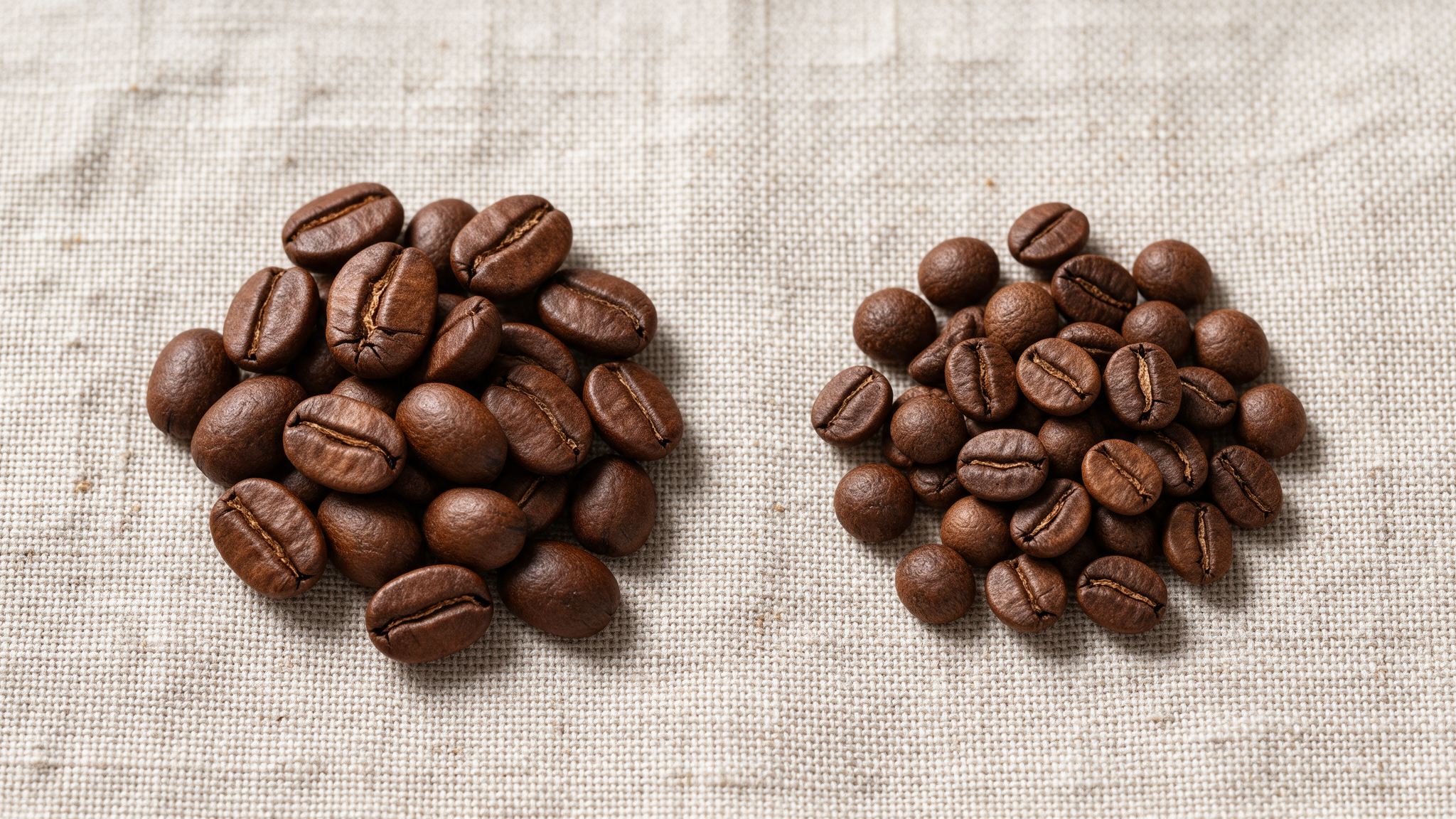
Almost every bag of coffee is arabica, robusta or a blend of the two. They are different species of the same plant, and the differences show up in the cup more clearly than most labels admit.
Flavour
Arabica tends toward fruit, sugar and floral notes, with brighter acidity. Robusta is earthier and more bitter, with notes often described as woody or cocoa-like. Much of that bitterness comes from its higher caffeine and chlorogenic acid content.
Caffeine
Robusta beans typically carry about twice the caffeine of arabica, roughly 2.2–2.7% of the bean's weight against 1.2–1.5%. Caffeine is bitter and also a natural pest deterrent, which is part of why robusta is hardier.
Why robusta is cheaper
Robusta grows at lower altitudes, tolerates heat and resists disease better, so it yields more per hectare. Arabica needs altitude, mild temperatures and more care, and the market prices it accordingly.
When robusta is the better pick
Traditional Italian espresso blends often include 10–20% robusta for thicker crema and a heavier body that stands up to milk. If you drink milky espresso drinks and find 100% arabica thin, a blend is worth trying.

About the author