How to Descale an Espresso Machine (Step by Step)
When to descale, what to use instead of vinegar, and the exact steps to clear limescale from your espresso machine in about 30 minutes.
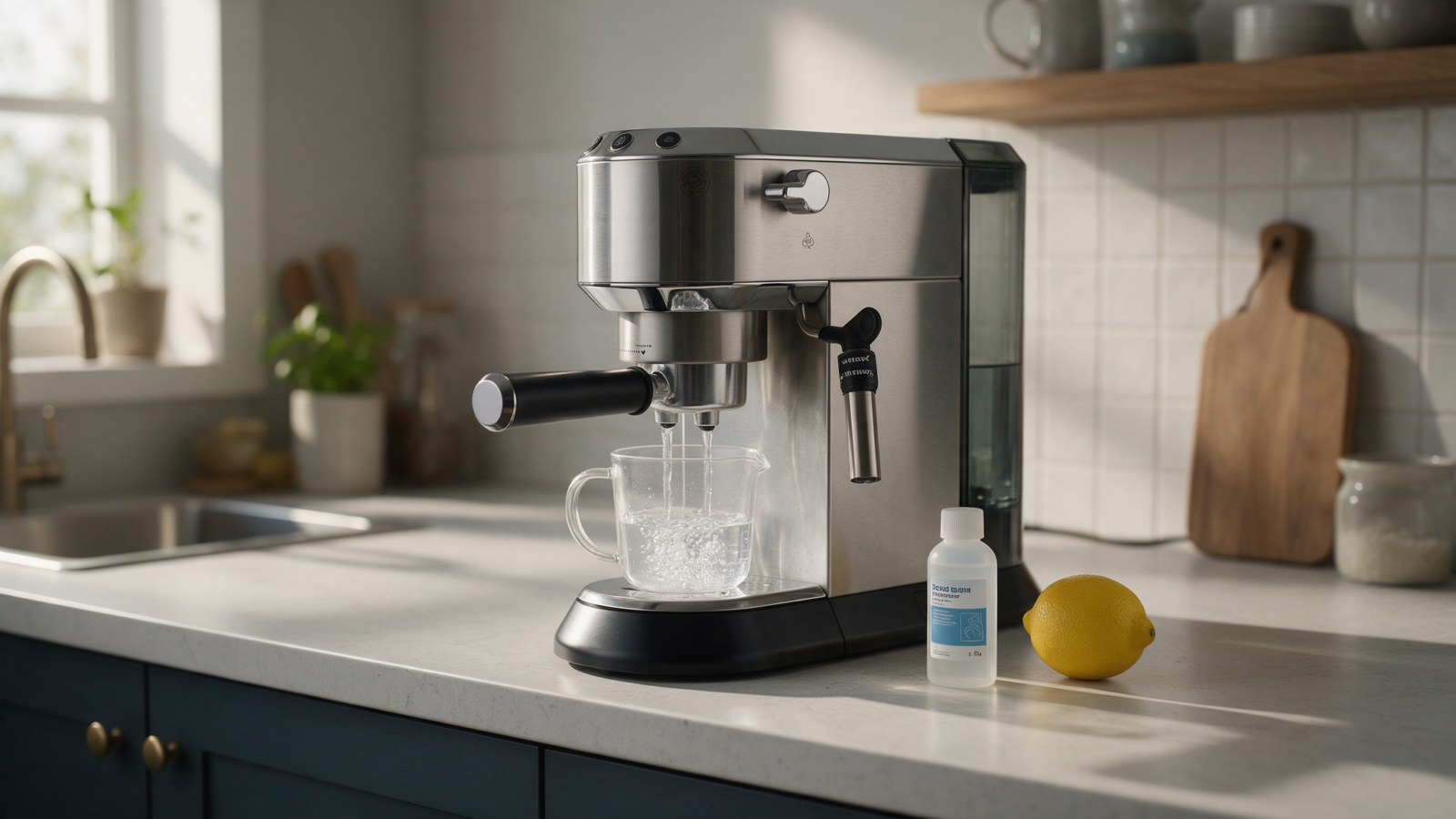
Limescale is the slow killer of home espresso machines. Every litre of tap water leaves a little calcium and magnesium behind in the boiler, pipes and pump, and over months that crust narrows the water path, insulates the heating element and makes your shots colder and slower. Descaling dissolves it. Done every few months, it takes about 30 minutes and keeps the machine pulling shots like it did on day one.
Signs your machine needs descaling
You rarely see scale form, but the machine tells you. Watch for these:
- Water flows more slowly from the group head, or the pump sounds louder and strained.
- Shots taste flat or sour because the brew water is no longer reaching temperature.
- The steam wand takes longer to build pressure or sputters.
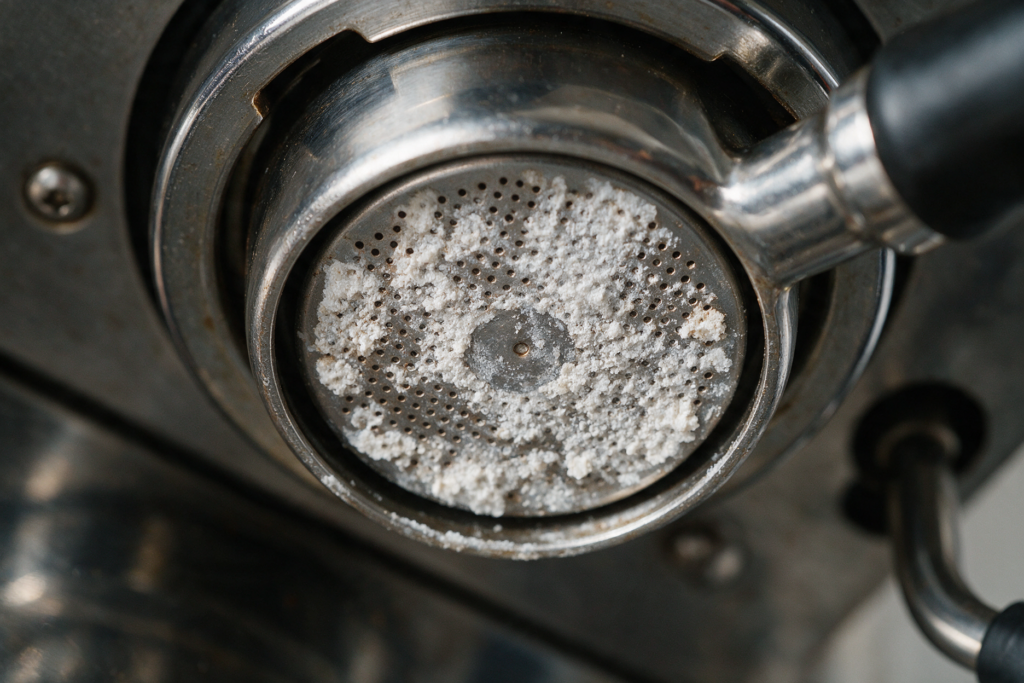
- White flakes or a chalky film appear in the drip tray, the water tank or on the shower screen.
How often to descale
It depends almost entirely on your water. The harder it is, the faster scale builds. As a rule of thumb:
- Hard tap water (above roughly 180 mg/L of calcium carbonate): every 4–8 weeks.
- Medium water: every 2–3 months.
- Soft or filtered water: every 4–6 months.
Many machines from De’Longhi, Breville and others count the water they use and switch on a descale light when it is time. If yours has one, follow it. Your local water supplier usually publishes the hardness of your tap water, and cheap test strips give you a reading in seconds.
What to use: descaler, citric acid or vinegar?
Commercial descaler is the safest choice. It is usually based on lactic or citric acid, is formulated not to attack seals or metal, and many manufacturers require it to keep the warranty valid. Use the brand your manual recommends if it names one.
Citric acid is the budget option and works well. A common mix is about 20–30 g of food-grade citric acid per litre of water. Dissolve it fully before pouring it into the tank.
Vinegar does dissolve scale, but it is the one most manufacturers tell you not to use. Its acetic acid can be harsh on rubber gaskets and some metals, the smell lingers, and it takes many rinses to get it out of the boiler. It is not worth the risk on a machine you care about.
How to descale an espresso machine, step by step
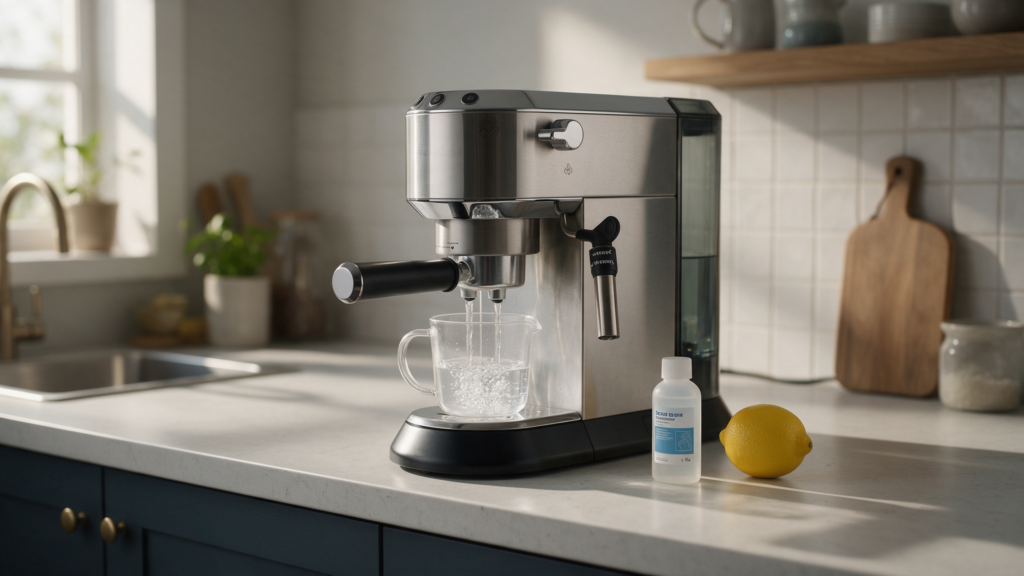
These steps work for most single-boiler and thermoblock machines. Always check your manual first: some machines have a dedicated descale program that runs the cycle for you.
- Empty and clean. Remove the portafilter, empty the drip tray and the water tank, and take out any water filter cartridge. Descaler can ruin it.
- Mix the solution. Fill the tank with descaler and water at the ratio on the bottle, or with your citric acid solution.
- Place a large container under the group head and another under the steam wand. You will run about a litre through.
- Run half through the group head. Turn the machine on and let it heat. Run water through the group head in short bursts of 20–30 seconds until about half the tank is gone.
- Run the rest through the steam wand. Open the steam or hot water valve and let the solution flow out in bursts too, so it reaches the steam circuit.
- Let it sit. Switch the machine off and leave it for 15–20 minutes so the acid can work on the remaining scale.
- Finish the tank. Turn it back on and run the remaining solution through the group head and wand.
- Rinse thoroughly. Rinse the tank, fill it with fresh water and run it all through the group head and wand. Do this at least twice. If you can still taste or smell the descaler, rinse again.
- Reassemble. Put the filter cartridge back, reset the descale light if your machine has one, and pull a test shot to throw away.
Descaling a De’Longhi machine
Most De’Longhi espresso machines, both manual models like the Dedica and bean-to-cup models like the Magnifica, have a built-in descale cycle. You start it from the menu or by holding a button combination listed in the manual, then follow the prompts to fill the tank with De’Longhi EcoDecalk and water, empty the tray and rinse. The machine handles the timing. When it asks for a rinse, fill the tank to the MAX line with fresh water.
Machines you should not descale yourself
Heat exchanger and dual boiler machines, including most E61 machines, are a different case. Large pieces of scale can break off during descaling and block small valves and jets. Several manufacturers advise against routine descaling of these and recommend preventing scale with suitable water instead. If you own one, check with the manufacturer or a service technician before you put acid through it.
How to keep scale from coming back
The best descale is the one you never need. Use filtered or bottled water with moderate hardness. The Specialty Coffee Association recommends brewing water with a total hardness of about 50–175 mg/L, with 68 mg/L as the target. Very soft or distilled water is not the answer either: it tastes flat and can corrode metal parts. A filter jug or the water filter cartridge many machines accept is usually enough.
FAQ
Can I descale with lemon juice?
Lemon juice contains citric acid, but also sugars and pulp that can leave residue. Pure citric acid powder is cleaner and cheaper.
Is descaling the same as cleaning?
No. Descaling dissolves minerals from water. Cleaning, or backflushing with a detergent like Cafiza, removes coffee oils from the group head. Do both on their own schedules.
What happens if I never descale?
Flow slows, temperature drops and eventually the heating element or pump can fail. Scale damage is one of the most common reasons home machines need repairs.

About the author