Coffee Grounds for Plants: Which Plants Like Them (and Which Don’t)
Coffee grounds help plants when composted or used thinly. Which plants like them, which don't, their real pH and the slug and acidity myths.
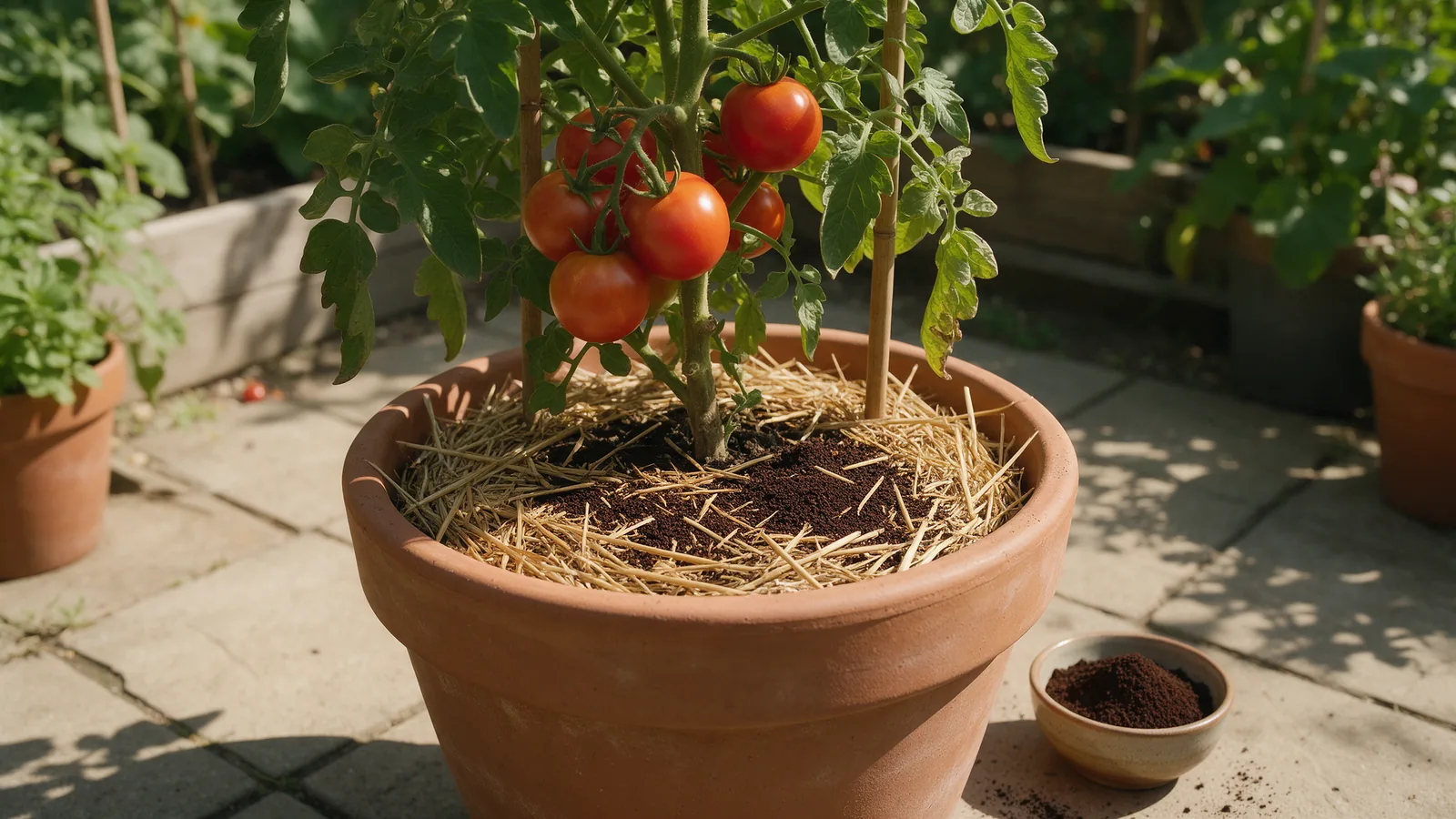
Yes, coffee grounds are good for plants, but only in moderation and ideally after composting. Used coffee grounds add organic matter and about 2% nitrogen, and they are close to neutral (pH 6.5–6.8), not acidic. The catch is that fresh grounds spread thickly or dug straight into soil can slow plant growth, because they still contain caffeine and other compounds that hold back seedlings. Put them in the compost, or scatter a thin layer no more than 1 cm deep under a coarser mulch. Tomatoes, roses, hydrangeas, blueberries and most leafy vegetables do well with them that way. Seedlings, succulents and Mediterranean herbs such as lavender and rosemary are better off without.
I go through a lot of coffee at home: a French press most mornings, a moka pot after lunch, a few espressos when friends drop by. That works out to roughly 15–30 g of wet grounds a day, which adds up to more than 7 kg a year. In Galicia, where it rains often and the soil is naturally acidic, I wanted to know whether those grounds belonged in the bin or in the garden. The internet answer is usually “sprinkle them everywhere”. The research answer is more careful, and more useful. Here is what spent coffee grounds actually do in soil, which plants like them, which don’t, and how to use them without stunting anything.
Short answer: yes, in moderation and composted
Coffee grounds are a kitchen by-product that adds organic matter to soil. Organic matter improves structure, helps sandy soil hold water, opens up clay and feeds the earthworms and microbes that do most of the real work in a garden. Coffee grounds also release nitrogen slowly as they break down.
The trouble is that coffee grounds are not inert. They contain leftover caffeine, chlorogenic acids and tannins, which plants use in the wild to discourage competitors. In a 2016 study from the University of Melbourne, Hardgrove and Livesley added spent coffee grounds directly to urban garden soil and grew broccoli, leeks, radishes, sunflowers, violas and other species. Growth went down for every plant tested, even at 2.5% of the soil volume. Composted grounds had a much smaller effect. That matches what gardening extension services (Oregon State University and Washington State University among them) have said for years: coffee grounds are a good compost ingredient and a mediocre soil additive on their own.
So the rule of thumb is simple: compost first, or use thin layers on the surface, and keep them away from anything small and just sprouted.
What coffee grounds add to soil (nitrogen, real pH, organic matter)
When Oregon State University Extension tested used coffee grounds, they found about 2.28% nitrogen, 0.06% phosphorus and 0.6% potassium, with a carbon-to-nitrogen ratio of roughly 20:1. For comparison, a typical balanced garden fertiliser might be 10-10-10. Grounds are not a fertiliser in that sense: their nitrogen is locked up in organic matter and only becomes available as microbes break it down over weeks and months.
| Property | Used coffee grounds | What it means in the garden |
|---|---|---|
| Nitrogen (N) | About 2% | Slow release; good “green” for compost |
| Phosphorus (P) | About 0.06% | Negligible |
| Potassium (K) | About 0.6% | Small contribution |
| pH (brewed, used) | About 6.5–6.8 | Close to neutral; won’t acidify soil |
| pH (fresh, unbrewed) | Lower, more acidic | Fresh grounds are a different story |
| C:N ratio | About 20:1 | Behaves like grass clippings in compost |
| Other compounds | Caffeine, chlorogenic acids, tannins | Can slow germination and root growth when used raw |
Two practical consequences follow. First, if you scatter raw grounds and dig them in, soil microbes start feeding on them and briefly grab nitrogen from the surrounding soil, which can leave plants a little hungry for a few weeks. Second, because brewed grounds are close to neutral, they won’t fix alkaline soil or replace a proper acidifier for blueberries.
Coffee itself is acidic, with a pH of around 4.8–5.1 in the cup, but the acids are water-soluble and go into the drink. What’s left in the filter is mostly fibre, oils and proteins. A pending guide on how acidic coffee really is goes into the chemistry in more detail.
Plants that like coffee grounds
“Likes” here means plants that respond well to the organic matter and slow nitrogen in composted grounds or thin top layers. None of them need coffee to thrive.
| Plant | Verdict | Best way to use grounds |
|---|---|---|
| Tomatoes | Yes, in compost | Compost mixed into the planting hole; thin mulch later in the season |
| Hydrangeas | Yes, but it won’t change the colour | Compost or thin mulch |
| Roses | Yes | Thin top layer under bark mulch, or compost |
| Blueberries | Yes, as organic matter | Mixed into an acidic mulch such as pine needles |
| Azaleas, rhododendrons, camellias | Yes, in moderation | Thin mulch, mixed with leaves |
| Leafy greens, cabbages, corn | Yes (nitrogen lovers) | Finished compost in the bed |
| Carrots and radishes | Only once established | Never in the seed row |
| Earthworms (worm bin) | Yes | Small amounts mixed with bedding |
Tomatoes
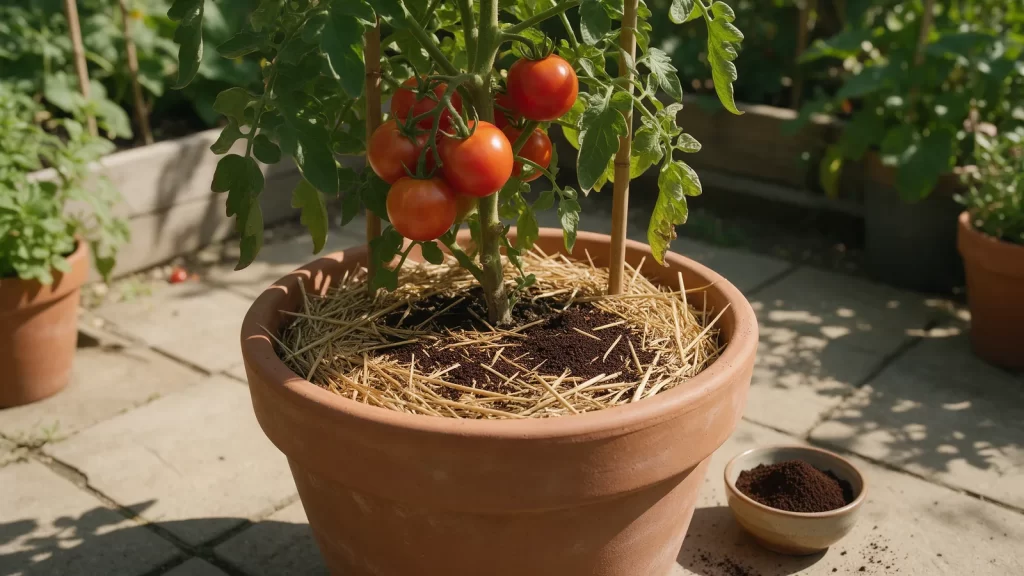
Coffee grounds for tomato plants are one of the most searched uses, and the answer is a qualified yes. Tomatoes are hungry plants that like rich, well-drained soil with a pH of about 6.2–6.8, which is right where used grounds sit. The best approach is to mix a couple of handfuls of compost that includes coffee grounds into the planting hole, then, once the plant is established and growing strongly, add a thin layer (5–10 mm) of grounds on the surface, covered with straw or another mulch. Avoid dumping fresh grounds right next to young transplants: the growth-slowing effect is strongest on small plants. Don’t count on grounds as a tomato feed either. Once the plants start to fruit, you will still need a proper tomato fertiliser rich in potassium.
Hydrangeas
Hydrangea flowers turn blue when the plant can take up aluminium, which happens in acidic soil, roughly below pH 5.5. Used coffee grounds are near neutral, so they won’t turn pink hydrangeas blue on their own. What they do is add organic matter that hydrangeas appreciate, since they like moist, rich soil. If you want blue flowers, use aluminium sulphate or an ericaceous feed, and treat coffee grounds as a soil conditioner.
Roses and blueberries
Roses are heavy feeders that respond well to organic mulch. A thin layer of grounds under bark mulch, renewed a few times a year, adds slow nitrogen and feeds the worms that keep rose beds open. Blueberries need truly acidic soil (pH 4.5–5.5), and grounds alone won’t get them there, but mixed with pine needles, composted bark or leaf mould they make a good, moisture-holding mulch. The same goes for azaleas, rhododendrons and camellias.
Plants that don’t like coffee grounds
Several groups of plants are better off without coffee grounds, especially fresh ones:
- Seeds and seedlings. Caffeine and phenolic compounds can inhibit germination and early root growth. Keep grounds out of seed trays, seed rows and the first few weeks after sowing.
- Mediterranean herbs. Lavender, rosemary, thyme, sage and oregano prefer lean, dry, often alkaline soil. Extra organic matter and moisture around their roots does them no favours.
- Succulents and cacti. Grounds hold water, which is exactly what these plants don’t want. In pots they can also compact and grow mould.
- Plants that prefer alkaline soil, such as lilacs, clematis, many brassica-family ornamentals and plants in chalky borders. They won’t be harmed by a little compost, but there is no reason to add grounds.
- Houseplants in small pots. A layer of grounds on the surface of indoor pots stays damp, grows mould and attracts fungus gnats. Use finished compost in the potting mix instead, or skip it.
Studies have also found that raw grounds reduce the growth of specific crops such as Chinese mustard and Italian ryegrass, and some gardeners report problems with geraniums and asparagus fern. The safest assumption is that any plant can be held back by thick layers of raw grounds, and that composting removes most of the problem.
A note on pets: used grounds still contain caffeine, and the ASPCA lists caffeine as toxic to dogs and cats. If your dog likes to dig or eat things in the garden, compost your grounds in a closed bin rather than leaving piles on the surface.
How to use coffee grounds for plants
There are three ways that work, from safest to most hands-on.
In the compost
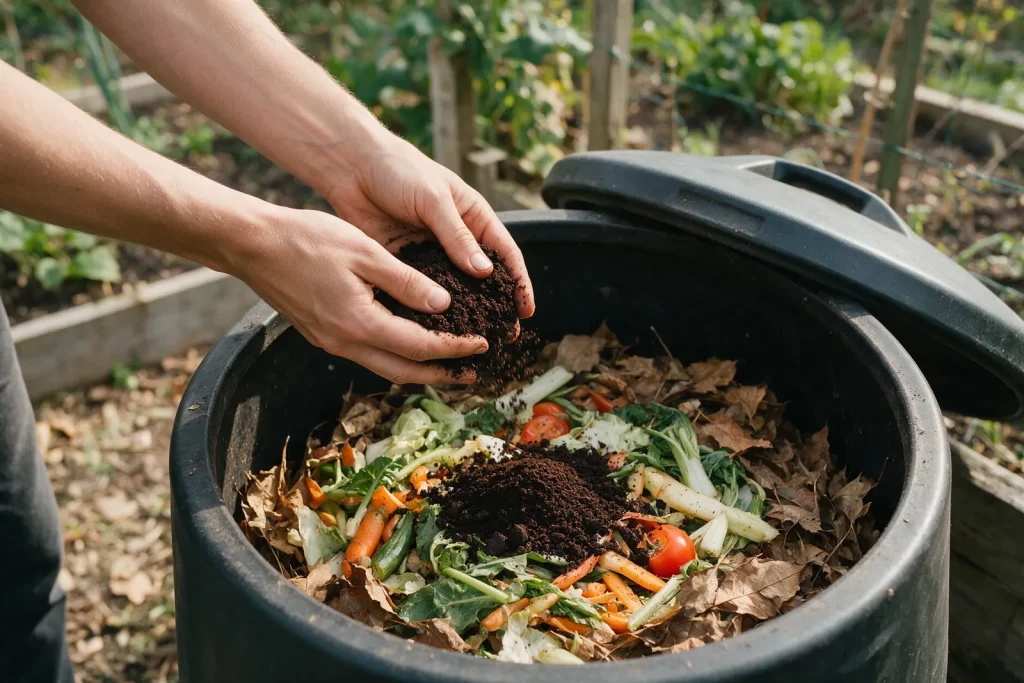
This is the best use by far. In compost terms, coffee grounds are a “green”: a nitrogen-rich ingredient, like grass clippings or vegetable scraps. Composting breaks down most of the caffeine and phenolic compounds, and finished compost is good for almost every plant in the garden.
- How much: keep grounds to about 10–20% of the pile’s volume. Extension guides generally say not to go beyond about a quarter.
- Balance: mix each caddy of grounds with two or three times as much “brown” material, such as dry leaves, shredded cardboard or straw.
- Paper filters: plain paper filters can go in too; tear them up so they break down faster.
- Worm bins: worms like coffee grounds, but add them a handful at a time, mixed with bedding, so the bin doesn’t get too wet or warm.
- Time: in a hot, well-turned pile, grounds break down in 2–3 months; in a cold heap, give it 6–12 months.
As a thin mulch
If you don’t compost, you can use grounds as a top dressing, with two conditions. First, keep the layer thin, no more than about 1 cm. Coffee grounds are fine particles that clump together; a thick layer dries into a crust that sheds water and can grow mould. Second, cover or mix them with something coarser, such as bark, wood chips, straw or leaves, so they don’t compact. Rake them lightly into the top centimetre of soil and keep them a few centimetres away from plant stems.
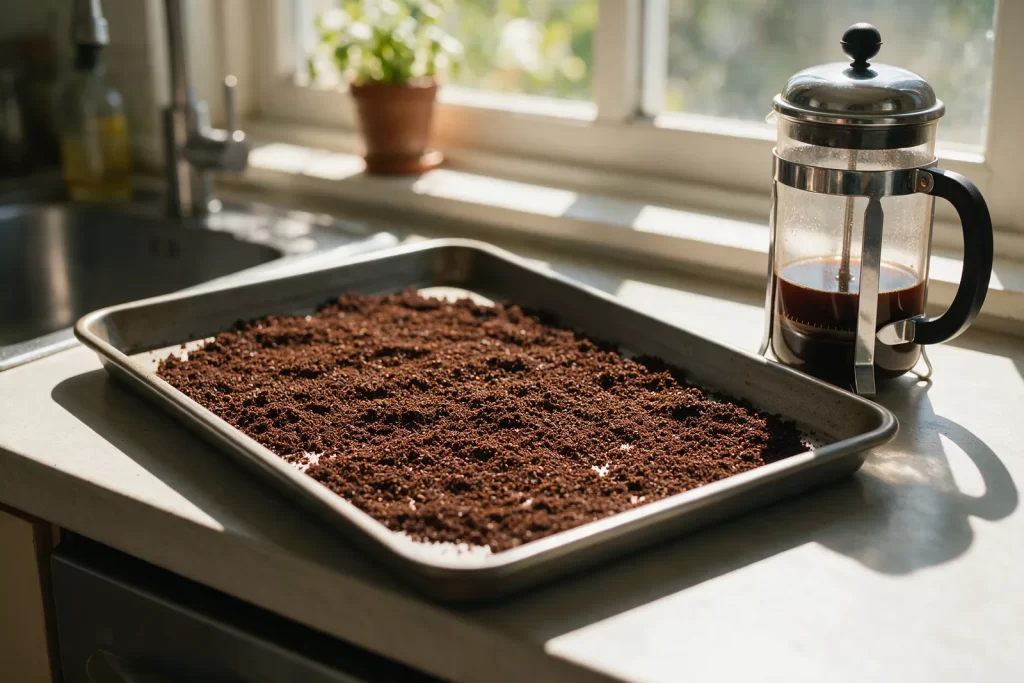
Let wet grounds dry before you store them: spread them on a tray or newspaper for a day or two (that’s the photo above). Damp grounds in a closed container go mouldy within a few days.
In pots
For containers, the safest rule is compost, not raw grounds. If you mix your own potting soil, coffee-ground compost can be up to about 10–15% of the mix. Avoid adding raw grounds to existing pots, and never use them in seed-starting mix. Outdoor containers with tomatoes, peppers or roses can take a very thin top layer, as long as it stays loose and dries between waterings.
And liquid “coffee fertiliser”?
Some people water plants with leftover coffee or soak grounds to make a “tea”. Diluted plain coffee (about one part coffee to four parts water) won’t hurt most outdoor plants occasionally, but it adds very little nutrition and can encourage mould on the surface of pots. Never pour coffee with milk or sugar on plants. If you have leftover cold brew concentrate from making cold brew at home, drink it, and save the grounds for the compost instead.
Myths: acidity, slugs and fungus
“Coffee grounds make soil acidic”
Mostly false. Fresh, unbrewed coffee grounds are somewhat acidic, but used grounds are close to neutral (around pH 6.5–6.8), because brewing washes the acids into the drink. Their effect on soil pH is small and short-lived. If you need to acidify soil for blueberries or heathers, use elemental sulphur or an ericaceous product and test your pH first.
“Coffee grounds keep slugs away”
Weak evidence. A 2002 study published in Nature by Hollingsworth and colleagues found that caffeine solutions of 1–2% killed slugs and snails, and that weaker solutions repelled them. That’s far stronger than anything a ring of coffee grounds delivers, and informal garden trials have found grounds make a poor barrier: slugs often cross them, especially once rain soaks them. Copper tape, beer traps, hand-picking at dusk and encouraging birds and frogs are more reliable.
“Coffee grounds cause fungus” or “prevent fungus”
Both claims are half true. Damp, thick layers of grounds grow mould, often harmless green or white moulds, which looks alarming but usually doesn’t hurt plants. On the other hand, some lab studies have found that compost made with coffee grounds can suppress certain plant diseases, such as Fusarium and Pythium. The practical takeaway is to keep layers thin and dry and compost the rest. Coffee grounds are, incidentally, a classic substrate for growing oyster mushrooms at home.
Other uses for coffee grounds at home and in the garden
- Fridge deodoriser: a bowl of completely dry grounds absorbs smells for a week or two.
- Scrub for pots and grills: the gritty texture helps lift baked-on residue (not on non-stick coatings or stone).
- Mushroom growing: fresh grounds (used within a day, still sterile from the hot water) can be mixed with oyster mushroom spawn.
- Natural dye: soaking grounds gives a warm brown tint for paper, eggs or fabric.
- Hand scrub: mixed with a little oil, grounds remove kitchen smells like garlic and onion from your hands.
- Drains: not a good idea. Grounds clump and contribute to blockages; put them in the compost or bin.
If you brew several cups a day, our guide to how much coffee per cup gives you a good idea of how many grams of grounds you produce: a typical mug uses 15–20 g of dry coffee, which comes out of the filter at roughly double that weight when wet. Old beans you no longer want to brew can go straight into the compost too.
FAQ
Are coffee grounds acidic?
Used coffee grounds are only slightly acidic, close to neutral, at around pH 6.5–6.8 according to Oregon State University. Fresh, unbrewed grounds are more acidic, but brewing washes most of the acids into your cup. Spent grounds won’t noticeably lower your soil’s pH.
Can you put coffee grounds directly on plants?
Yes, but only as a thin layer (no more than about 1 cm) on the soil surface, ideally mixed with or covered by a coarser mulch, and kept away from stems and seedlings. Don’t dig large amounts of raw grounds into soil: research has shown it can slow plant growth. Composting them first is the safer option.
Do coffee grounds keep slugs away?
Not reliably. Strong caffeine solutions (1–2%) kill slugs in lab conditions, but a layer of used grounds doesn’t come close to that dose, and slugs often cross it, especially when it is wet. Use copper tape, beer traps or hand-picking instead.
Are coffee grounds good for tomato plants?
Yes, when composted or used as a thin mulch on established plants. Tomatoes like rich soil around pH 6.2–6.8, and grounds add organic matter and slow-release nitrogen. Keep fresh grounds away from young transplants and still use a potassium-rich tomato feed once the plants start fruiting.

About the author