How Long Does Cold Brew Last in the Fridge? (And Can You Heat It Up?)
Cold brew concentrate lasts up to 2 weeks in the fridge, diluted 3–4 days, with milk 1–2. Signs it's gone bad, storage tips and how to heat it up.
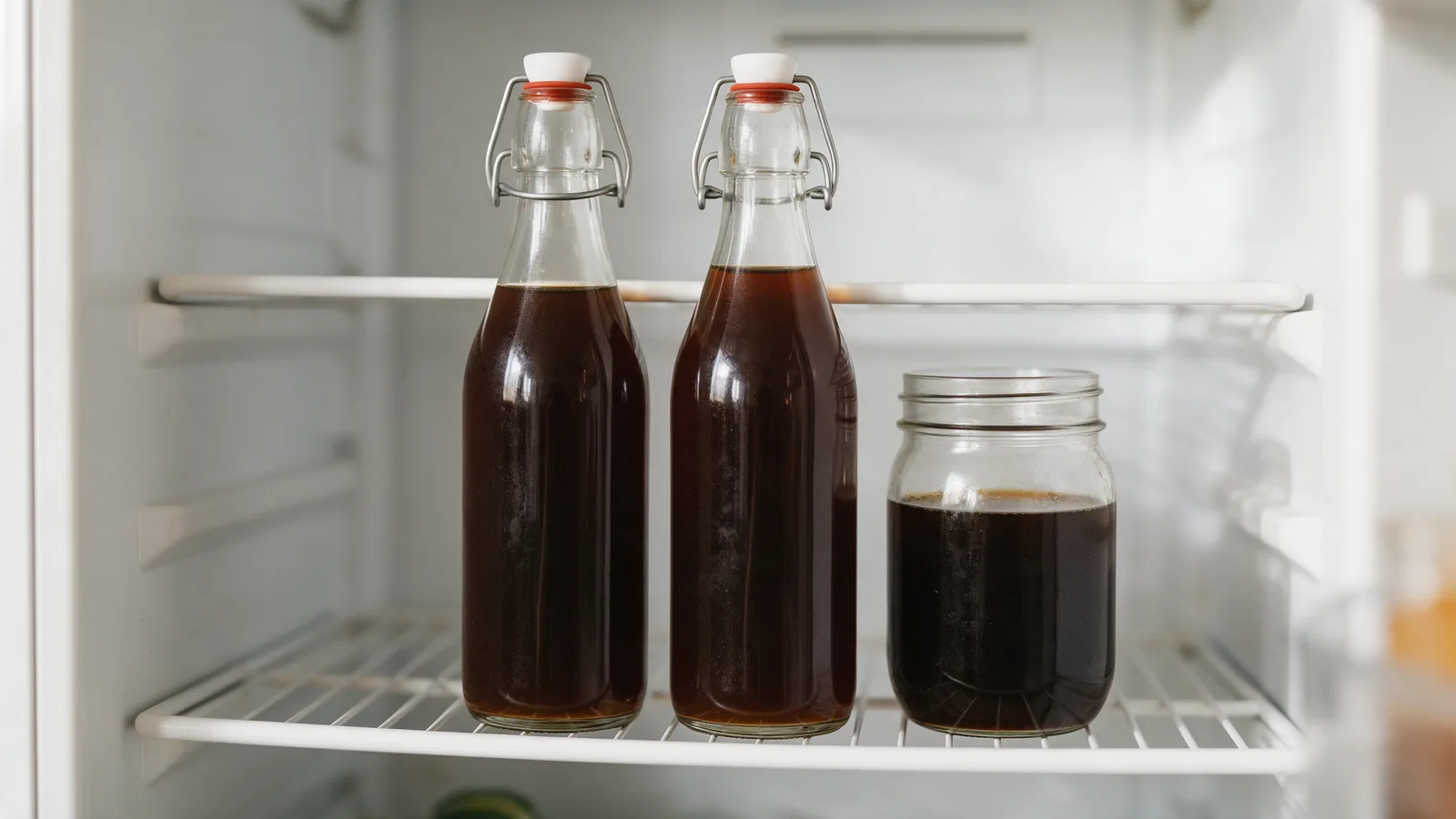
How long does cold brew last in the fridge? Undiluted cold brew concentrate keeps its best flavour for about 7 to 10 days and stays safe to drink for up to 2 weeks in a sealed container at 4 °C (40 °F) or below. Once you dilute it with water, drink it within 3 to 4 days, and if you have added milk, cream or syrup, within 1 to 2 days. Toss it sooner if it smells sour, looks cloudy or shows any film or mould. And yes, you can heat up cold brew: mix the concentrate with hot water or warm it gently, just never boil it.
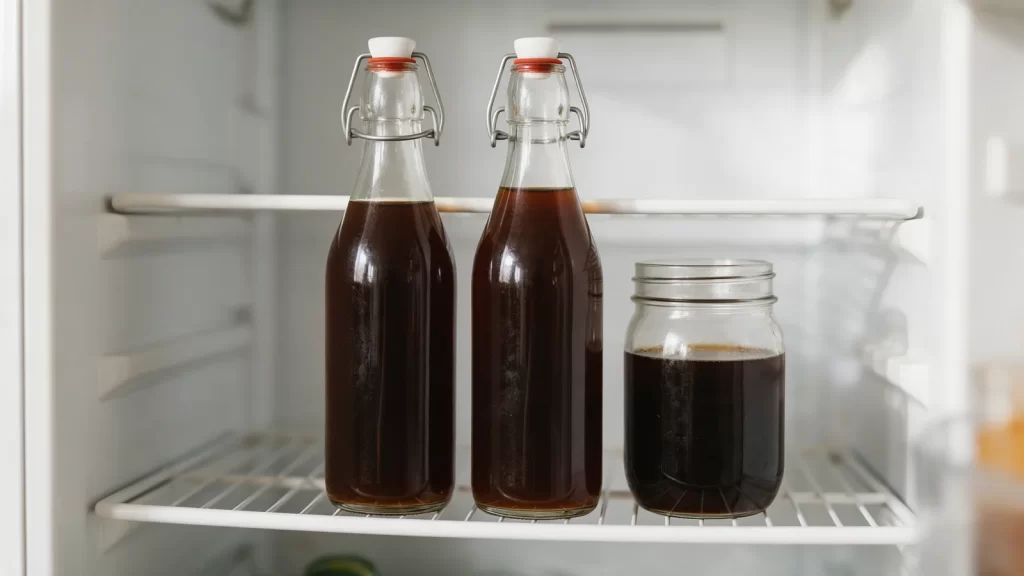
How long does cold brew last in the fridge? The short answer: concentrate vs diluted
The single biggest factor is strength. A concentrate brewed at 1:4 or 1:5 (200–250 g of coffee per litre of water, as in our cold brew concentrate recipe) has less water per gram of coffee solids, and it was usually filtered before anything else touched it. Diluted cold brew, especially once milk is in the mix, gives bacteria and oxidation more to work with.
| Type of cold brew | Best flavour | Safe limit (fridge, 4 °C or below) |
|---|---|---|
| Concentrate, undiluted, sealed | 7–10 days | About 14 days |
| Ready-to-drink (1:8 to 1:15) | 2–3 days | 4–7 days |
| With milk, cream or plant milk | Same day | 24–48 hours, or the milk’s own date if sooner |
| Sweetened with syrup | 2–3 days | About 4 days |
| Store-bought, unopened | Printed date | Printed date |
| Store-bought, opened | 3–5 days | About 7 days, unless the label says less |
| Frozen as ice cubes | 1 month | 2–3 months for quality |
Why the gap between “best” and “safe”? Flavour fades long before coffee becomes risky. After about a week the bright, chocolatey notes go flat and a stale, papery taste creeps in as aromatic compounds oxidise. It will not make you ill, but it is not why you brewed cold brew. In my own fridge a 1:5 concentrate in a swing-top bottle still tastes good on day 10, while a jug I had already diluted for the week was noticeably dull by day 5.
Store-bought bottles are a different case: commercial cold brew is often pasteurised or high-pressure processed (HPP) and filled into sealed containers, which is why an unopened bottle can carry a date months away. Once opened, it behaves like homemade.
How to tell if cold brew has gone bad
Coffee rarely “goes off” dramatically, so use your senses and be strict with anything containing milk. Pour it out if you notice:
- A sour or vinegary smell. Fresh cold brew smells sweet, nutty or chocolatey. Sharp, fermented or alcoholic notes mean microbes have been at work.
- Mould or a film on the surface. Even a few fuzzy spots or a slimy skin mean the whole batch goes, not just the top layer.
- Cloudiness or stringy bits that were not there before. A little fine sediment on the bottom is normal, especially from a French press; a hazy, thickened liquid is not.
- Milk that has curdled or separated into lumps.
- A flat, cardboard taste. That one is oxidation rather than spoilage: safe, just past its best.
When in doubt, throw it out. A litre of cold brew costs a couple of euros in beans; a stomach bug costs a lot more.
How to store cold brew so it lasts
A few habits stretch your batch from “drink it this week” to “drink it next week”:
- Filter thoroughly. Coffee particles keep extracting and add bitterness and haze. A second pass through a paper filter, or a cloth bag, makes concentrate keep longer and taste cleaner.
- Use glass with a tight lid. Swing-top bottles or mason jars do not absorb odours the way some plastics do, and they limit contact with air. Fill them close to the top so there is less oxygen inside.
- Refrigerate within an hour or two of filtering. If you steep at room temperature, move the finished coffee to the fridge straight away. The FDA recommends keeping the fridge at 40 °F (4 °C) or below.
- Keep it at the back, not in the door. The door is the warmest, most temperature-swinging spot in the fridge.
- Store it as concentrate. Dilute by the glass instead of the jug, and add milk only when you pour. This is the main reason concentrate makes more sense than brewing at drinking strength.
- Label the date. A strip of masking tape with the brew day saves guesswork.
- Use clean equipment. Wash jars, filters and funnels in hot soapy water and let them dry fully. Old coffee oils turn rancid and transfer that taste to the next batch.
If you are still dialling in strength, our cold brew ratio guide explains how much coffee to use for concentrate versus ready-to-drink, and how stronger brews affect caffeine is covered in does cold brew have more caffeine. A French press works fine for small batches too: the guide to making cold brew in a French press is coming soon.
Can you leave cold brew out overnight?
Black cold brew left out overnight at normal room temperature is unlikely to make you sick, but it is not ideal. Cold brew has a pH of around 5 to 6, less acidic than hot coffee, so it offers less natural protection than you might expect, and it is often brewed at room temperature for 12–18 hours already. Adding another 8–10 hours warm pushes your luck and dulls the flavour. My rule: if it is black and the kitchen was cool, taste it and use it that day; if the room was hot, or you are not sure how long it sat, discard it.
With milk, cream or plant milk the answer is simple: follow the USDA “danger zone” rule and do not leave it between 4 °C and 60 °C (40–140 °F) for more than 2 hours, or 1 hour above 32 °C (90 °F). Overnight is a no.
Can you heat up cold brew coffee?
Yes. Heating cold brew gives you a hot cup that is smoother and less sharp than regular drip, because the cold extraction pulled out fewer of the compounds we perceive as bitter and sour. A study in Scientific Reports (Rao and Fuller, 2018) found cold brew had similar pH but lower titratable acidity than hot brew made from the same beans, which matches how it tastes. Heating does not undo that, as long as you keep it gentle.
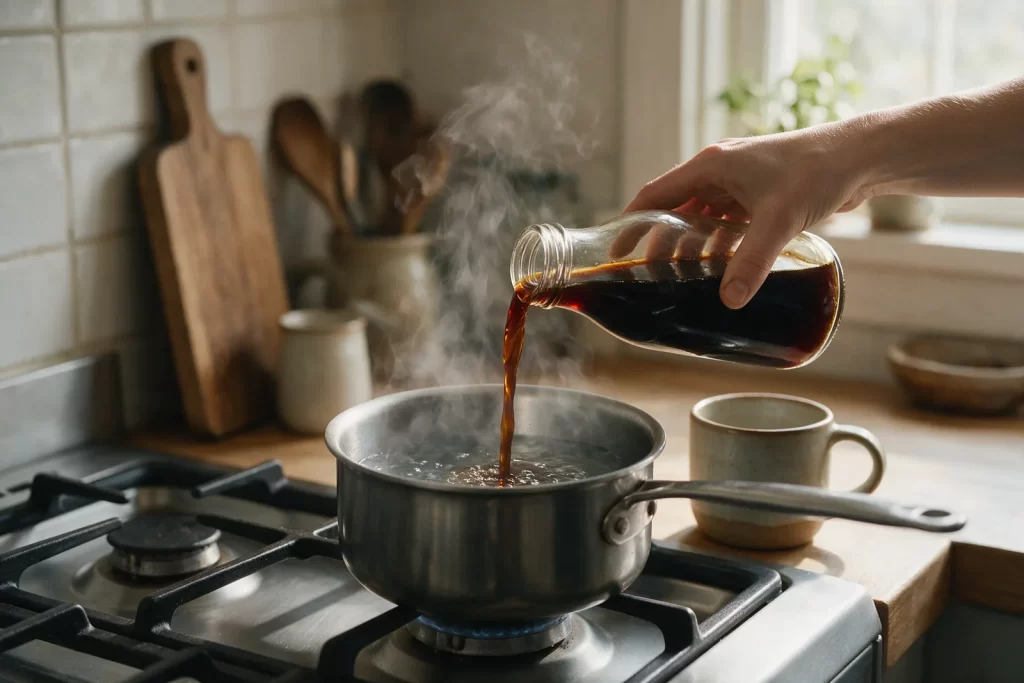
Three easy ways to do it:
- Hot water dilution (best). Pour 100 ml of concentrate into a mug and top up with 100–150 ml of water just off the boil. You get a drink around 65–70 °C, ready to sip, with no extra equipment.
- Saucepan. Warm already-diluted cold brew over low to medium heat, stirring, until it steams. Take it off before it simmers.
- Microwave. 45–60 seconds for a 250 ml mug, stirring halfway.
Hot cold brew (from concentrate)
- Coffee
- 100 ml cold brew concentrate (1:5)
- Water
- 100–150 ml water just off the boil
- Grind
- Coarse (when brewing the concentrate)
- Water temp
- Serve at 60–70 °C, never boil
- Time
- 1 minute
What to avoid: boiling it, or keeping it on a hotplate. Above about 85 °C the delicate aromatics flash off and bitterness rises, so the cup ends up tasting like stewed coffee. Heating also will not rescue cold brew that has already gone sour: if it was bad cold, it is bad hot.
Can you freeze cold brew? Coffee ice cubes
Freezing is the best way to save cold brew you will not finish in time. Pour concentrate or ready-to-drink cold brew into an ice cube tray, freeze it, then move the cubes to a zip bag or airtight box so they do not pick up freezer smells. They keep their flavour for about a month and are fine for 2–3 months.
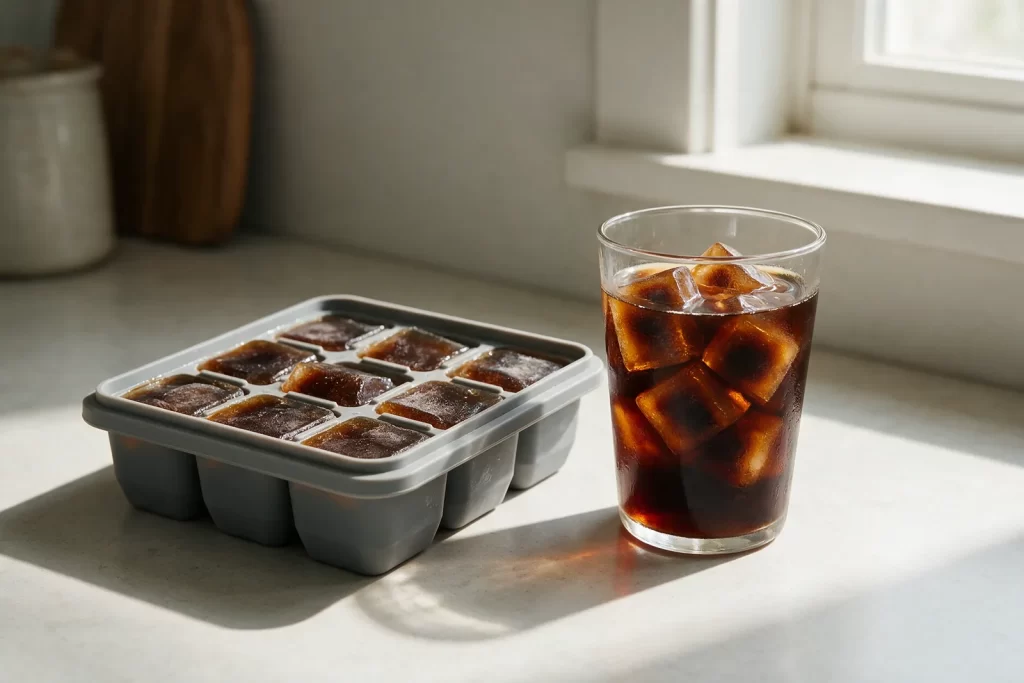
Coffee ice cubes are the cure for watery iced coffee: as they melt they add more coffee instead of more water. Drop them into an iced latte, into a glass of milk for an instant latte, or into a blender for a frappé. A standard tray cube holds about 25–30 ml, so 4 cubes of 1:5 concentrate plus 150 ml of milk make a strong drink. Thawed in the fridge overnight, a bag of cubes also turns back into perfectly usable cold brew.
One thing freezing does not suit is nitro. If you love that creamy texture, our guide to what nitro cold brew is explains why it has to be served fresh from the tap or siphon.
FAQ
Does cold brew go bad?
Yes, eventually. Black concentrate in the fridge stays safe for about two weeks and tastes best in the first 7–10 days. Diluted cold brew lasts 3–4 days and cold brew with milk 1–2 days. Mould, a sour smell or cloudiness mean it has spoiled.
Can you leave cold brew out overnight?
Black cold brew left out for one night in a cool room is generally safe but will taste flatter; in a hot room, or with any milk added, throw it out. Dairy drinks should not sit above 4 °C for more than 2 hours.
Can you microwave cold brew?
Yes. Microwave a 250 ml mug of diluted cold brew for 45–60 seconds, stirring halfway, and stop before it boils. Mixing concentrate with hot water gives an even better result with less risk of overheating.
How long does cold brew concentrate last?
Up to 2 weeks in a sealed glass container at 4 °C or below, with the best flavour in the first 7–10 days. Keep it undiluted and add water or milk only when serving.
Does the caffeine in cold brew go down over time?
Not meaningfully over a week or two in the fridge. Caffeine is a stable molecule; what fades is aroma and flavour, not the kick.

About the author
Keep reading
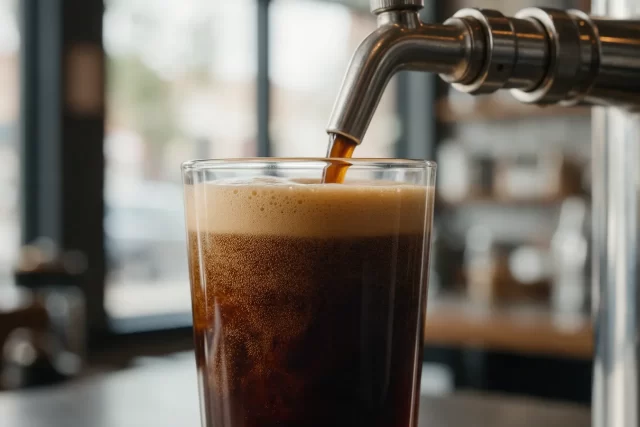
What Is Nitro Cold Brew? Taste, Caffeine and How It’s Made
What is nitro cold brew? Cold brew charged with nitrogen and poured from a tap: creamy, no dairy, about 265 mg caffeine per 16 oz. How to make it at home.
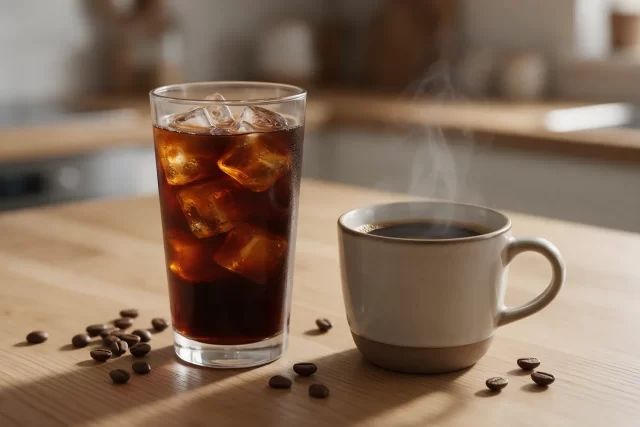
Does Cold Brew Have More Caffeine Than Regular Coffee?
Does cold brew have more caffeine? Usually: 150–250 mg per 12 oz glass vs about 140 mg for drip. Why it varies, a table vs espresso and how to cut it.
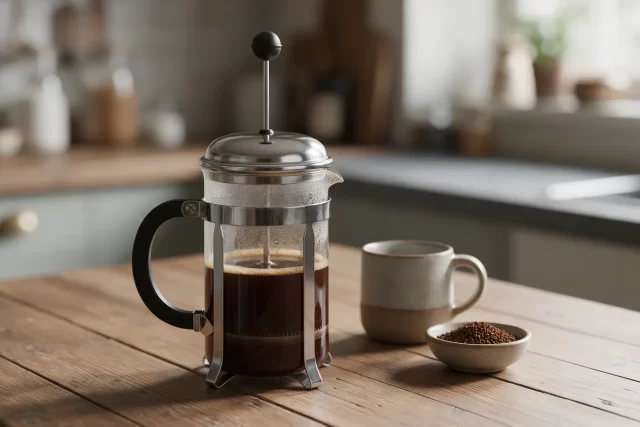
French Press Coffee Ratio: How Much Coffee to Use (Chart)
The best French press coffee ratio is 1:15: 30 g of coarse coffee for 450 ml of water. Chart by press size, grind, steps and fixes for bitter cups.